
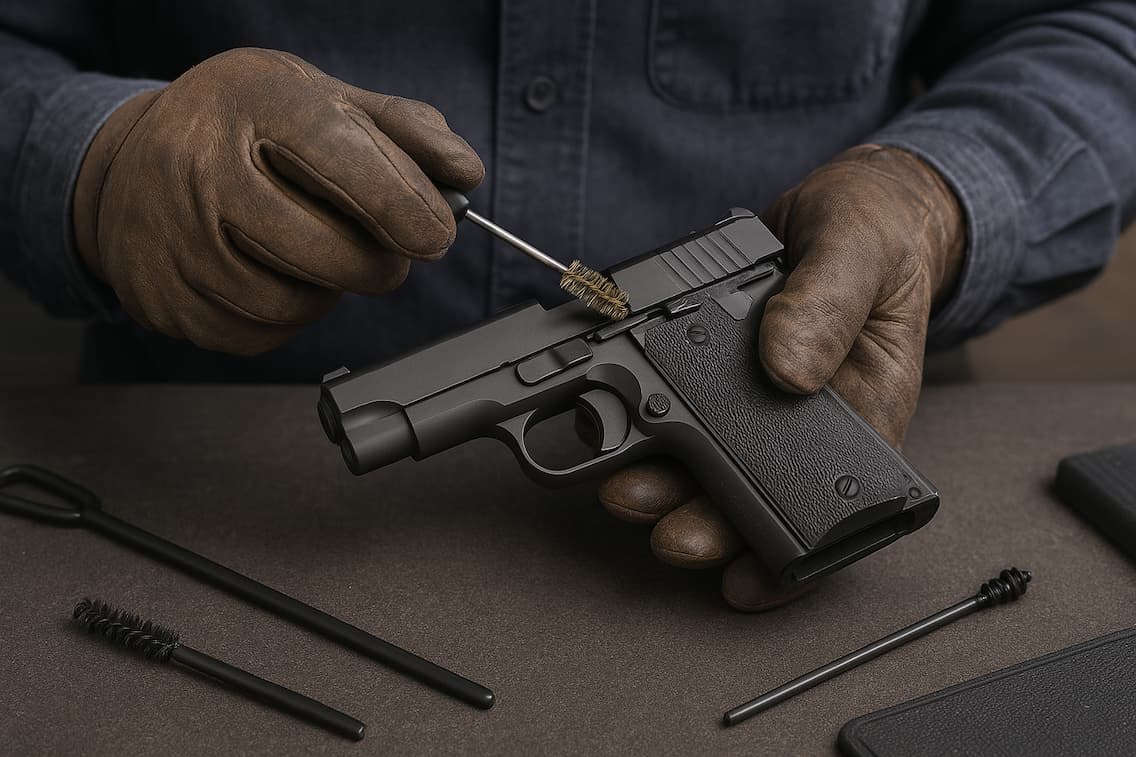
A guide to cleaning, inspecting, and storing firearms to ensure long-term performance and safety.
Owning a firearm is both a privilege and a responsibility. Whether you use your gun for self-defense, hunting, or sport shooting, its reliability can make all the difference when it matters most. Regular maintenance is not just about keeping your gun looking clean; it is about ensuring that it performs safely and consistently every time you pull the trigger.
Neglecting maintenance can lead to malfunctions, corrosion, and even dangerous misfires. Understanding how to properly clean, inspect, and store your firearm protects both you and the people around you. This guide will walk you through the importance of firearm maintenance, the steps involved, and how to develop habits that preserve performance and extend the life of your firearm.
Why Firearm Maintenance Matters
Every firearm, from a simple revolver to a modern semi-automatic rifle, is a precision instrument. When you fire a gun, small particles of carbon, copper, lead, and unburned powder are left behind. Over time, these residues build up inside the barrel and action, causing friction and affecting accuracy. Moisture, sweat, and environmental debris can also lead to rust and corrosion, especially if the gun is not properly cleaned or lubricated.
Regular maintenance prevents these problems and ensures that your firearm functions correctly under pressure. It also helps identify small issues before they become major safety hazards.
The benefits of proper maintenance include:
- Improved accuracy and reliability.
- Longer lifespan for critical components.
- Prevention of misfires, jams, and mechanical failure.
- Retention of firearm value for resale or collection.
A well-maintained gun is a safe gun. It demonstrates respect for the tool and for the serious responsibility that comes with owning it.
Step 1: Cleaning Your Firearm the Right Way
Cleaning is the foundation of firearm maintenance. It removes fouling, debris, and moisture that could affect performance. The process may vary depending on the type of firearm, but the general steps are consistent across most models.
1. Always ensure your firearm is unloaded.
Before cleaning begins, check and double-check that your firearm is unloaded. Remove the magazine, open the action, and visually and physically inspect the chamber. Safety should always come first.
2. Disassemble according to the manufacturer’s instructions.
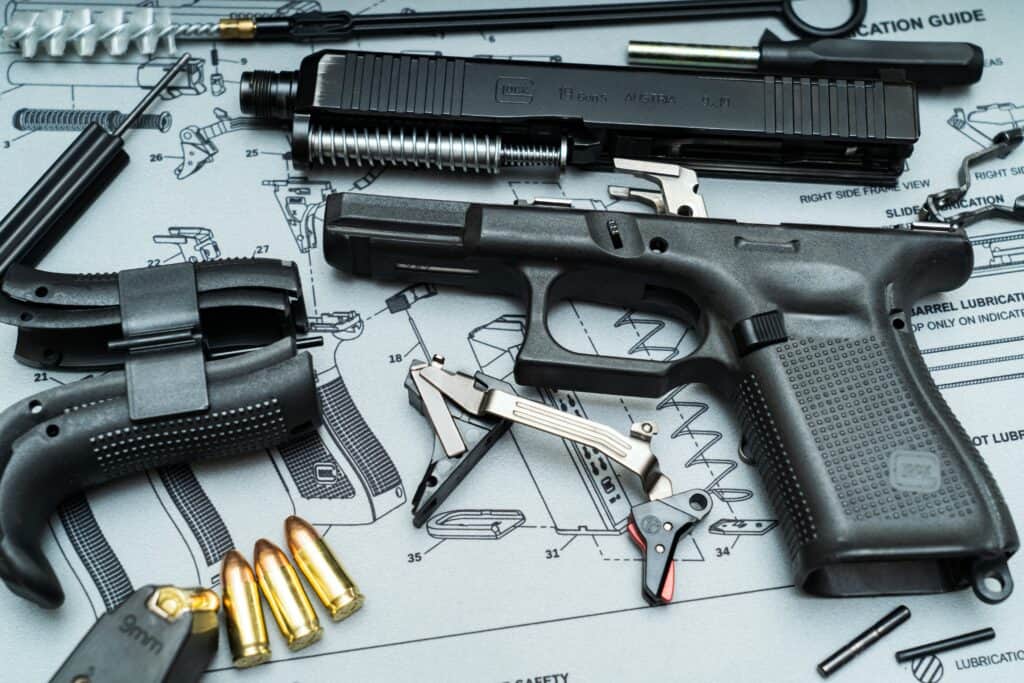
Each firearm has specific disassembly procedures. Refer to your owner’s manual or trusted resources before taking anything apart. Only disassemble as far as needed for routine maintenance — typically field stripping is sufficient for regular cleaning.
3. Use the proper cleaning supplies.
Invest in a quality cleaning kit that includes:
- Cleaning rods or bore snakes
- Patches and brushes (appropriate for your caliber)
- Solvent and lubricant (gun-specific, not general-purpose oil)
- Microfiber or lint-free cloths
4. Clean the barrel and chamber.
Apply solvent to a patch or brush and run it through the barrel several times. Let the solvent sit briefly to loosen fouling, then push clean patches through until they come out spotless. Pay attention to the chamber area where residue tends to collect.
5. Clean and inspect the action.
Wipe down the bolt, slide, or cylinder components with a cloth and solvent. Remove any visible buildup. Check for wear, cracks, or unusual marks. A clean firearm also gives you the best view for inspection.
6. Lubricate carefully.
Apply a thin layer of lubricant to the moving parts as directed by your manufacturer. Too little lubrication can cause friction, while too much can attract dirt and debris. A balanced application keeps your firearm smooth and reliable.
7. Reassemble and function-check.
Once cleaned and lubricated, reassemble your firearm and perform a basic function check to make sure everything operates properly. Always handle with the muzzle pointed in a safe direction.
Step 2: Regular Inspection for Reliability and Safety
Cleaning alone is not enough. Regular inspection helps catch potential issues that could lead to dangerous malfunctions. A firearm is a mechanical system, and like any machine, its components wear over time.
During each cleaning session, look for:
- Cracks or damage: Check the slide, barrel, frame, and stock for cracks, chips, or deformation.
- Wear patterns: Examine the locking lugs, rails, and springs for signs of excessive wear or bending.
- Loose screws or pins: Tighten as needed, following proper torque specifications.
- Corrosion or pitting: These can weaken metal parts and affect structural integrity.
If you ever notice unusual sounds, misfires, or inconsistent cycling, stop using the firearm and have it inspected by a qualified gunsmith. Preventive maintenance is cheaper, and safer than repairs after an accident.
Step 3: Proper Firearm Storage
A clean gun is only safe if it is also properly stored. Responsible storage protects against unauthorized access, theft, and environmental damage. It also aligns with many state and federal legal requirements.
1. Choose the right storage method.
- Gun safe: Offers the highest level of protection from theft and accidents. Many safes also provide fire resistance.
- Lockbox or cabinet: Suitable for smaller firearms or when a safe is not practical.
- Cable or trigger locks: A cost-effective way to secure a firearm, especially for households with children.
2. Control temperature and humidity.
Firearms should be stored in a dry, cool environment. Use silica gel packets or a dehumidifier in your gun safe to prevent moisture buildup that can lead to rust.
3. Store ammunition separately.
Keep ammunition in a separate, secure location away from the firearm. This adds an additional layer of safety and helps reduce the risk of accidents.
4. Routine checkups.
Even stored firearms need periodic attention. Inspect them every few months for signs of rust or degradation and reapply lubricant as needed.
How Often Should You Clean and Maintain Your Firearm?
The frequency of cleaning depends on how often the firearm is used and the conditions in which it operates.
- After each use: Clean and inspect immediately after shooting.
- For regularly carried firearms: Wipe down weekly and perform full cleaning every few weeks to remove lint, sweat, and dust.
- For stored firearms: Check every few months to ensure lubrication and rust protection remain intact.
Firearms used for defensive purposes should always be maintained in top condition. In a critical moment, reliability is not optional.
Building Responsible Maintenance Habits
Consistent firearm care is a reflection of responsible ownership. To build effective habits:
- Schedule regular maintenance sessions on your calendar.
- Keep a log of cleanings, inspections, and parts replacements.
- Educate family members about safe handling and storage procedures.
- Take advantage of certified gun safety courses that cover care and maintenance.
A culture of responsibility begins at home. The more knowledge and discipline you apply, the safer your household and community become.
Maintenance Is More Than Routine: It Is Responsibility
Firearm maintenance is not a chore; it is an investment in safety, reliability, and respect for the right to bear arms. A well-cared-for gun performs when you need it most, protects you and your loved ones, and upholds the image of responsible gun ownership in America.
By committing to regular cleaning, inspection, and secure storage, you not only preserve your firearm’s longevity but also reinforce the values that make the Second Amendment enduring — preparedness, accountability, and respect.
When you take care of your firearm, it will take care of you. Reliability begins with responsibility, and that responsibility begins with maintenance.